
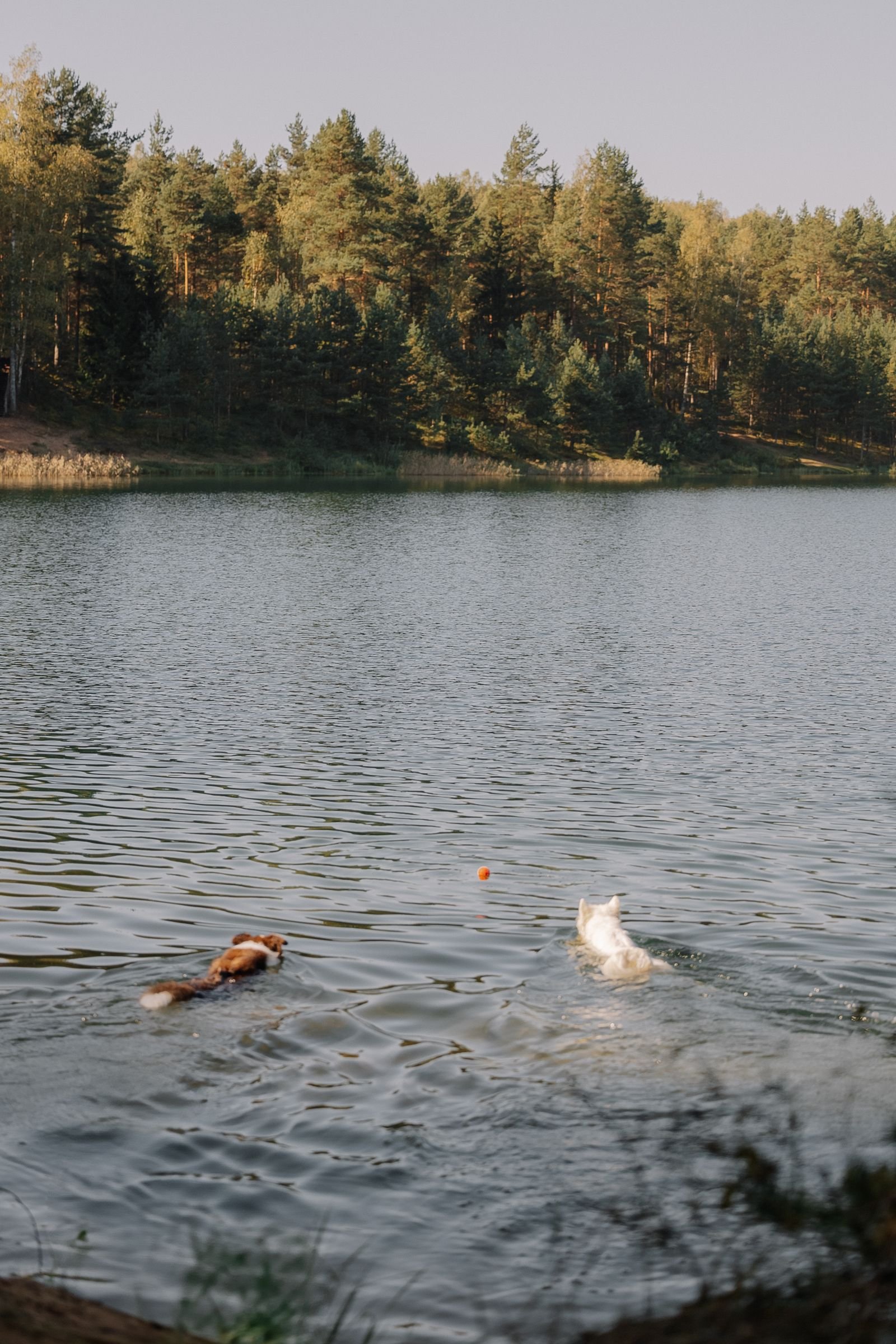
Dogs often develop ear infections after summer swimming because water trapped in the ear canal creates a warm, damp environment where yeast and bacteria can multiply. Watch for head shaking, scratching, redness, or an unusual odour. Gently towel-dry the outer ears after every swim, and book a veterinary exam promptly if any of these signs appear.
Why swimming so often leads to ear trouble
A dog’s ear canal is shaped differently from ours. Instead of running straight in, it drops down vertically and then turns horizontally toward the eardrum, forming an L shape. Water that splashes in during a swim does not simply run back out. It can sit at the bottom of that bend, and the canal stays damp long after the rest of your dog has dried off in the sun.
That trapped moisture softens the skin lining the canal and raises the humidity inside the ear. Small amounts of yeast and bacteria live on healthy skin all the time without causing problems, but a warm, wet, poorly ventilated canal gives them ideal conditions to multiply. After a few summer weekends of lake, pool, or beach swims, some dogs end up with an irritated, inflamed ear that needs professional attention.
Signs South Surrey owners notice first
The earliest clue is usually behaviour. A dog with an uncomfortable ear will shake its head repeatedly, tilt it to one side, scratch at the ear with a back paw, or rub the side of its face along the carpet or grass. Some dogs become head shy and flinch or grumble when you reach toward the sore ear, even if they are normally happy to be handled.
Looking and smelling can tell you more. An irritated ear may appear red or swollen inside the flap, look waxier or dirtier than usual, or give off a noticeably unpleasant odour, often described as musty or sour. You might also see dark discharge or notice your dog seems tired or grumpy. Any combination of these signs after a summer of swimming is a good reason to have the ear examined.
Floppy-eared and water-loving breeds are more prone
Ear shape matters. Breeds with long, hanging ear flaps, such as retrievers, spaniels, setters, basset hounds, and many doodle crosses, carry a natural lid over the ear canal. That flap traps warmth and moisture underneath and blocks airflow, so a wet canal takes far longer to dry than it would in a dog with upright ears.
Many of these same breeds are also enthusiastic swimmers, which doubles the risk through simple repetition. Dogs with narrow ear canals, heavy hair growth inside the ear, allergies, or a history of previous ear problems are also more vulnerable. If your dog fits any of these descriptions, a consistent after-swim drying routine and regular ear checks are especially worthwhile.
Why poking around or home-treating can make things worse
It is tempting to grab a cotton swab or an over-the-counter remedy at the first whiff of a smelly ear, but please resist. Inserting anything into the canal can push debris deeper, scratch the delicate skin, or even injure the eardrum. Ear problems also have different causes, including yeast, bacteria, ear mites, allergies, or something lodged in the canal, and each needs a different approach.
There is another important reason to hold off. If the eardrum is damaged, some products that are safe in a healthy ear can cause real harm, and only a proper look inside the canal can confirm the eardrum is intact. Your veterinarian can examine the ear safely, identify what is actually going on, and recommend care that fits your dog rather than a guess that might delay recovery.
Drying your dog’s ears after every swim
The good news is that prevention is simple and takes less than a minute. After each swim at the pool, the lake, or one of our local beaches, gently towel-dry the ear flaps and the outer part of each ear. Let your dog shake, since a good head shake flings a surprising amount of water out of the canals, then blot the outer ear again. Never push the towel, a cotton swab, or anything else down into the canal itself.
Dogs that swim often, or breeds with heavy, floppy ears, benefit from a routine drying habit and a quick weekly look inside the ear flap so you learn what normal looks and smells like for your dog. Our team can show you a safe drying technique at any visit, and our medical grooming service can help manage excess hair around the ears in dogs that grow a lot of it.
When to book a veterinary exam
Book an appointment as soon as you notice persistent head shaking, scratching, odour, redness, discharge, or pain around the ears. Ear irritation rarely resolves on its own, and the longer it continues, the more uncomfortable your dog becomes and the harder the problem can be to clear. If your dog seems to be in significant pain, has a head tilt that will not go away, or seems off balance, our urgent care team can see your dog promptly.
At the clinic, our medical services team can examine the ear canal with proper equipment, and pet diagnostics such as a microscopic look at an ear swab help identify whether yeast, bacteria, or mites are involved. From there, your veterinarian can recommend the right care for your dog and talk through how to keep the ears healthy for the rest of swim season in South Surrey and White Rock.
Frequently asked questions
Why does my dog get ear infections after swimming?
Water trapped in the ear canal creates a warm, damp environment where yeast and bacteria multiply. A dog’s L-shaped canal holds moisture instead of draining it, so ears can stay wet inside long after a swim.
What are the first signs of an ear infection in dogs?
Head shaking, scratching at the ear, a head tilt, redness inside the flap, discharge, and an unusual odour are the most common early signs. Some dogs also become sensitive about having their head touched.
How should I dry my dog’s ears after a swim?
Gently towel-dry the ear flap and the outer part of the ear, and let your dog shake its head to fling water out of the canal. Never insert a towel, cotton swab, or anything else into the ear canal itself.
Can I treat my dog’s ear infection at home?
No, home treatment is not recommended. Ear problems have several possible causes that each need different care, and some products can cause harm if the eardrum is damaged. Your veterinarian can examine the ear safely and recommend the right next steps.
Are some breeds more likely to get swimmer’s ear?
Yes. Floppy-eared breeds such as retrievers, spaniels, and basset hounds are more prone because the ear flap traps moisture and limits airflow. Dogs with hairy or narrow ear canals, allergies, or previous ear problems also face higher risk.